Pathology
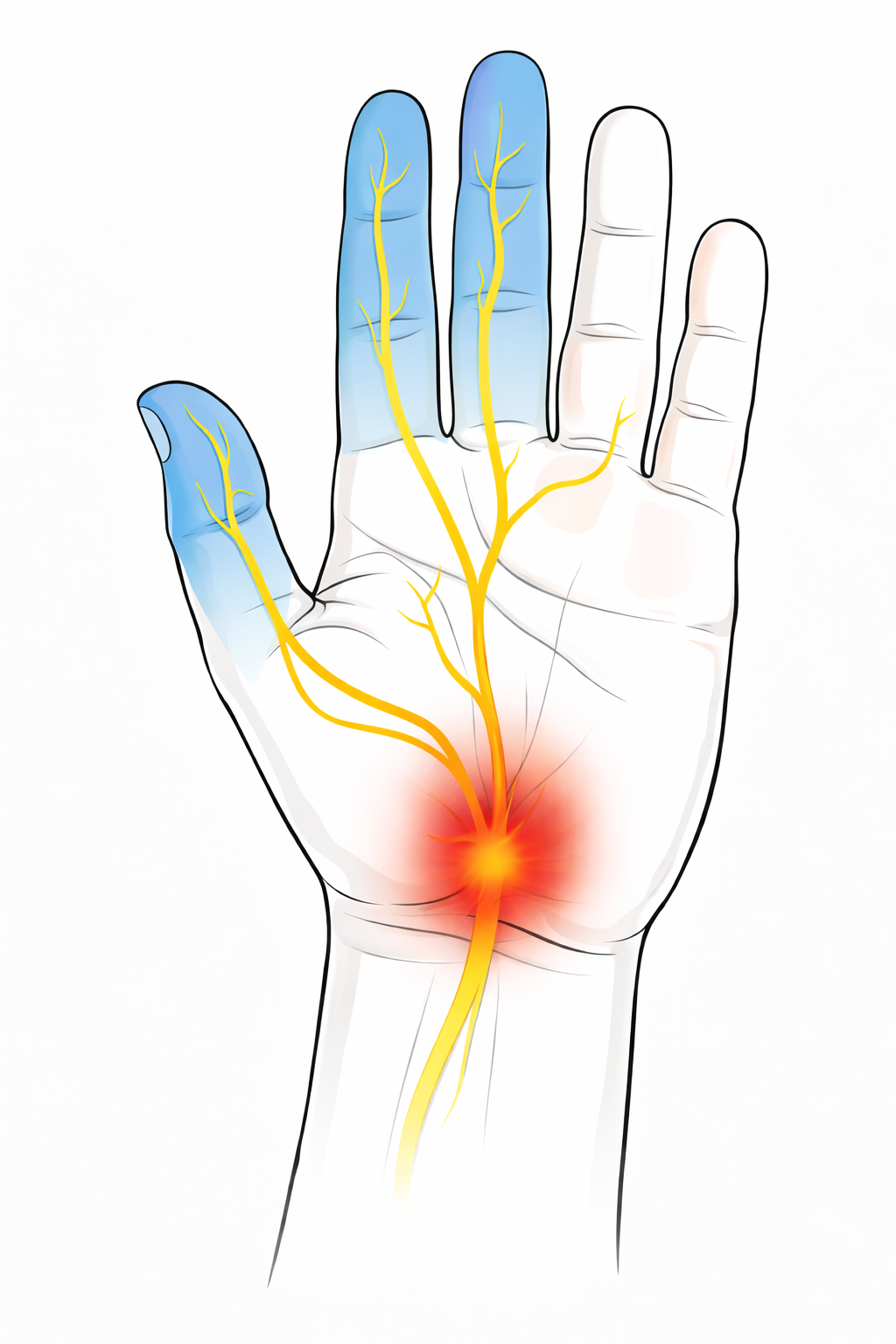
Carpal tunnel syndrome is a compression of the median nerve, which passes through a rigid tunnel at the wrist.
Symptoms usually begin with tingling, burning sensations, or pain in the thumb, index finger, and middle finger, particularly at night or in the morning. Later, symptoms may also occur during the day, for example while driving, reading a newspaper, or using a tablet or smartphone.
Examination
ENMG (Electroneuromyography):
This test, performed by a neurologist, evaluates the function of the median nerve using electrical stimulation. It helps determine the location of the nerve compression and the severity of the condition.
Treatment
Non-surgical
Surgical
The goal of the surgery is to open the “roof” of the carpal tunnel to create more space for the median nerve. Tingling usually disappears within a few days. If the nerve compression was severe, recovery may take longer and can last several weeks or months.
Follow-up
After the operation, you will leave with a padded dressing or a plaster splint to avoid pressure on the palm of the hand.
It is important to move your fingers as normally as possible. Complete healing usually takes about two weeks. This corresponds to the time needed before the sutures are removed, unless they are absorbable, in which case they will dissolve on their own.