also called gonarthrosis
Pathology
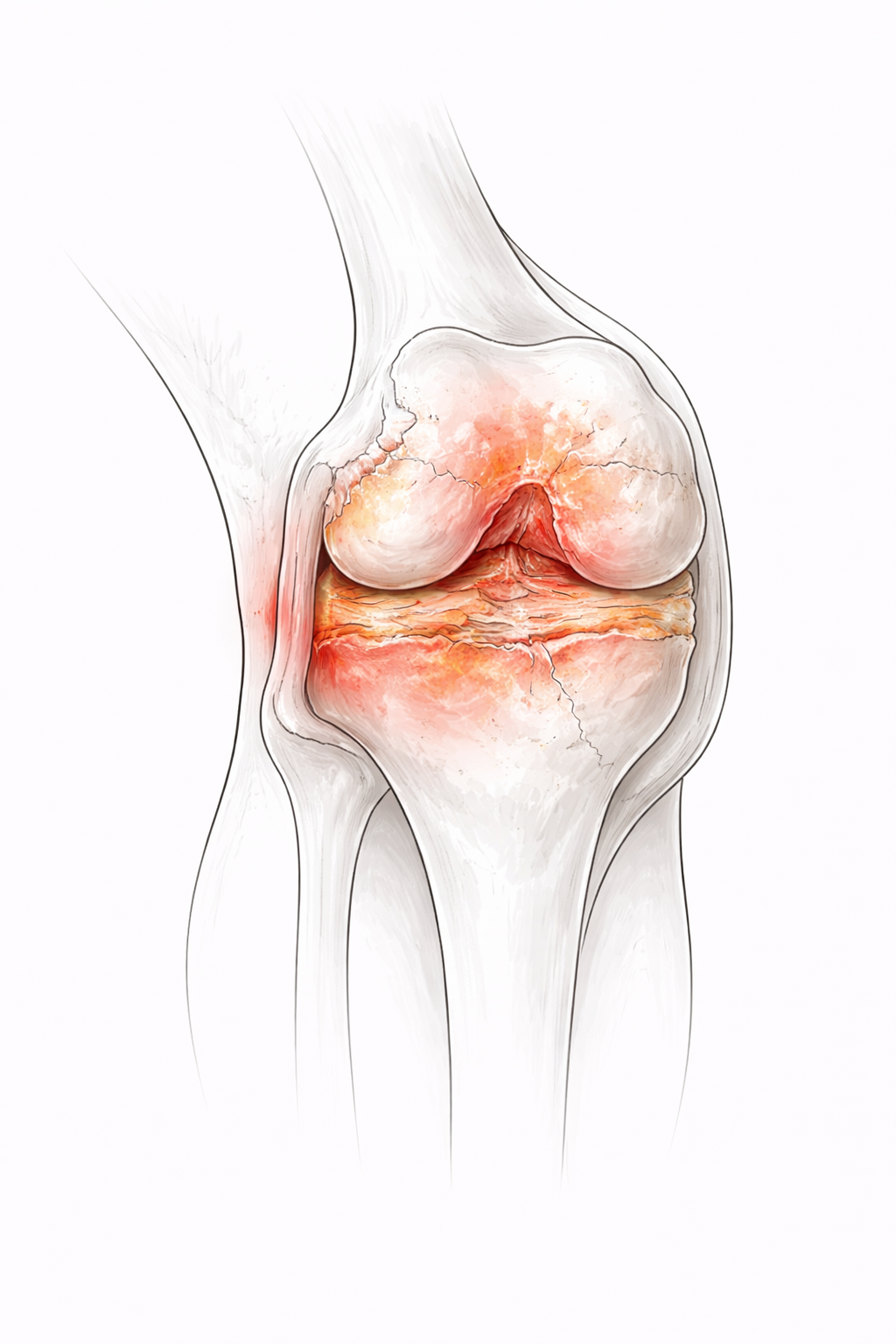
Gonarthrosis is a degeneration of the cartilage of the knee joint. Cartilage normally allows smooth gliding between the joint surfaces. Over time, it becomes thinner and deteriorates, leading to friction between the bones.
This condition is common with aging, but it can also be promoted by previous trauma, excess weight, malalignment of the legs (varus or valgus knee), or intense physical activity.
Typical symptoms include mechanical pain (during activity), stiffness, reduced mobility, and sometimes swelling of the knee.
Examination
The diagnosis is based on clinical examination and imaging.
Knee X-rays help confirm osteoarthritis by showing joint space narrowing, osteophytes (bone spurs), or deformity. MRI is generally not necessary unless there is diagnostic uncertainty.
Treatment
Non-surgical treatment
Initial treatment is conservative:
Surgical treatment
In cases of significant pain and failure of conservative treatment, surgery may be considered:
Recovery
Gonarthrosis is a progressive condition. Treatment aims to relieve pain and improve function.
After knee replacement, functional recovery takes several months, with essential rehabilitation. Most patients experience a clear improvement in pain and quality of life.

