Pathology
Cubital tunnel syndrome is a condition in which the ulnar nerve becomes compressed at the inside of the elbow, within the cubital tunnel.
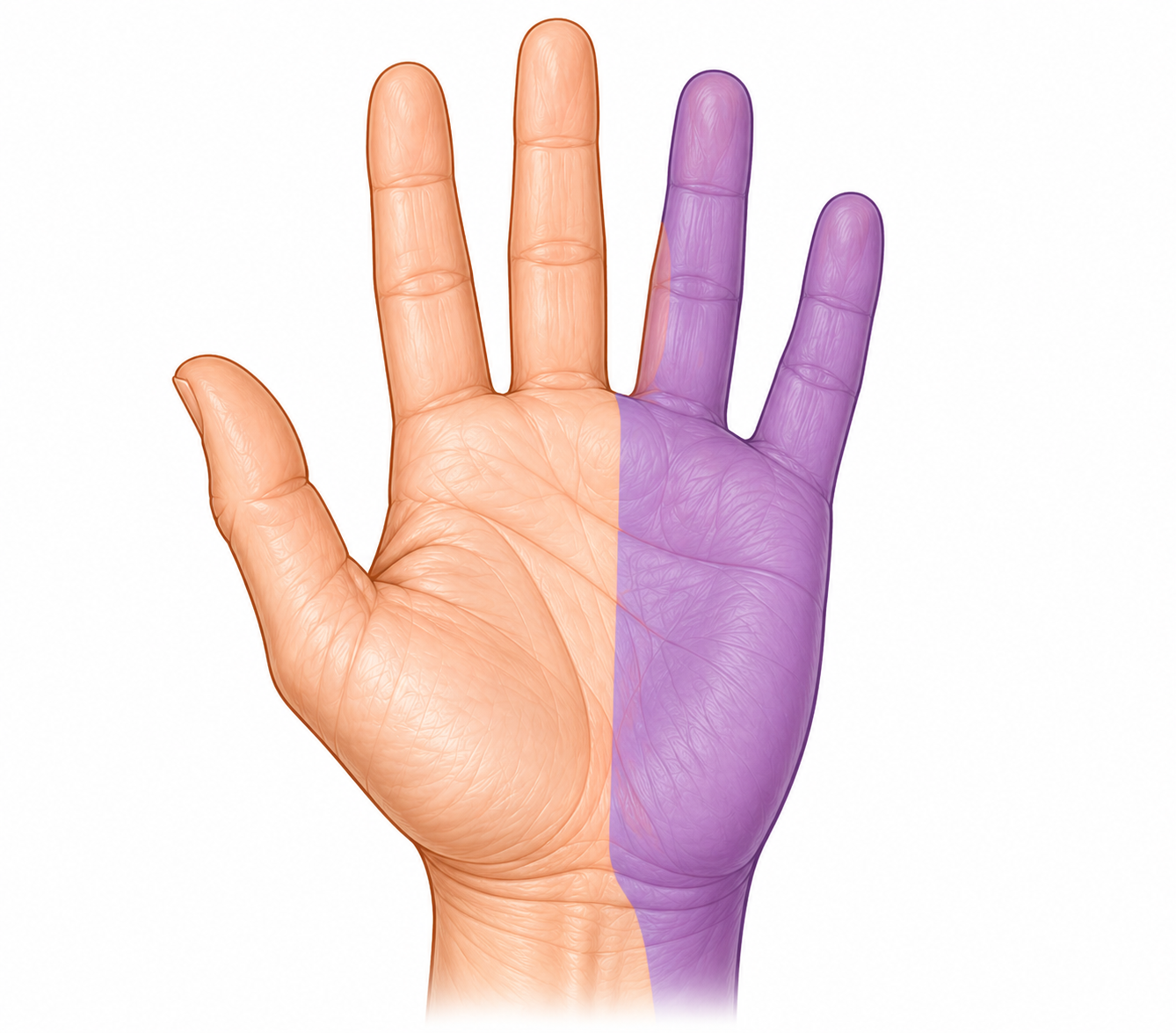
This nerve provides sensation to the little finger and part of the ring finger and controls several hand muscles. Compression or irritation can occur due to prolonged leaning on the elbow, repeated bending, or anatomical factors.
Typical symptoms include tingling and/or numbness in the little and ring fingers, pain on the inner side of the elbow, and sometimes weakness in the hand or difficulty with fine motor tasks.
Examination
The diagnosis is usually made based on clinical examination, with tests that reproduce the symptoms.
A nerve conduction study (EMG) may be performed to assess the severity of nerve compression. Imaging is rarely required.
Treatment
Non-surgical treatment
In mild cases, treatment is conservative:
Surgical treatment
If symptoms persist or there are signs of nerve damage, surgery may be indicated. This involves decompression of the nerve and sometimes repositioning it to a less vulnerable location (anterior transposition).
Recovery
Recovery depends on the severity and duration of the nerve compression.
Tingling may gradually improve, but in long-standing cases recovery may be incomplete. After surgery, improvement may take several weeks to months.

